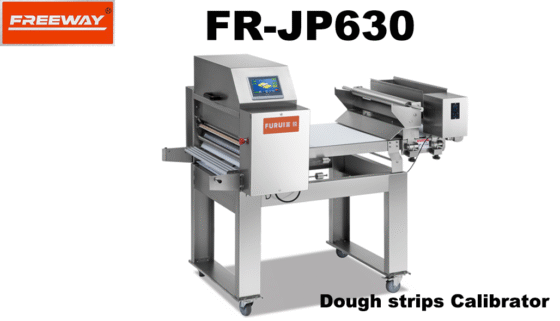
FR-JP630 High-efficiency, High-precison Calibrator
 The dough strip calibrator homogenizes the dough sheet—especially from one spool to the next—and ensures exact weight distribution,when feeding the line with a dough spool.The dough loop control ensures that the dough sheet passes through the calibrator without tension or stretching (in the infeed with electromagnetic dough scale and at the outfeed with light sensor).

A dough calibrator (also known as a dough strip calibrator) is a key piece of equipment in food processing—especially in the pasta and baking industries—used to homogenize dough sheets. Its primary functions include ensuring uniform thickness, texture, and weight distribution across the dough, providing a consistent base for subsequent processing steps such as rolling, forming, or cutting.
Dough Homogenization
The calibrator uses precision rollers or scraping mechanisms to eliminate inconsistencies in thickness and texture that may occur during preliminary dough processing. This ensures uniform density and 延展性 throughout the dough sheet, particularly addressing variations at the junctions between consecutive dough spools.
Weight and Thickness Control
The device precisely regulates the weight distribution of the dough sheet, maintaining minimal weight deviations (typically within ±1% depending on the model). It also allows operators to set and maintain a specific thickness, providing standardized inputs for downstream processes (e.g., noodle making, dumpling wrappers, or bakery products), thus enhancing product consistency.
Integration with Production Lines
Modern calibrators often interface with other equipment in the production line (e.g., electromagnetic dough scales, sensors) through automated control systems (e.g., micro-embedded computers, touchscreen panels). This integration ensures the dough passes through the calibrator without tension or stretching, maintaining processing stability.
- Pasta Processing: Prepares dough for noodles, wonton skins, spring roll wrappers, etc., ensuring uniform thickness and texture for consistent cooking results.
- Bakery Industry: Homogenizes pastry and dough sheets for bread, pastries, and other baked goods, improving post-baking shape retention and texture.
- Industrial Food Production: Integrates with mixers, rollers, and cutters in automated production lines to enhance efficiency and standardization.
- High Automation: Equipped with LCD touchscreens and sensors for intuitive parameter setting, one-button operation, and real-time monitoring.
- Precision Control: Combines mechanical design with electronic regulation to achieve tight tolerances in thickness and weight distribution.
- Versatility: Adjustable roller speeds and pressure settings accommodate different dough consistencies (e.g., hardness, moisture content) and flour types (wheat, 杂粮,etc.).
Dough calibrators significantly reduce manual intervention and material waste, making them indispensable for ensuring product quality in industrial food production.
 mā'ohio

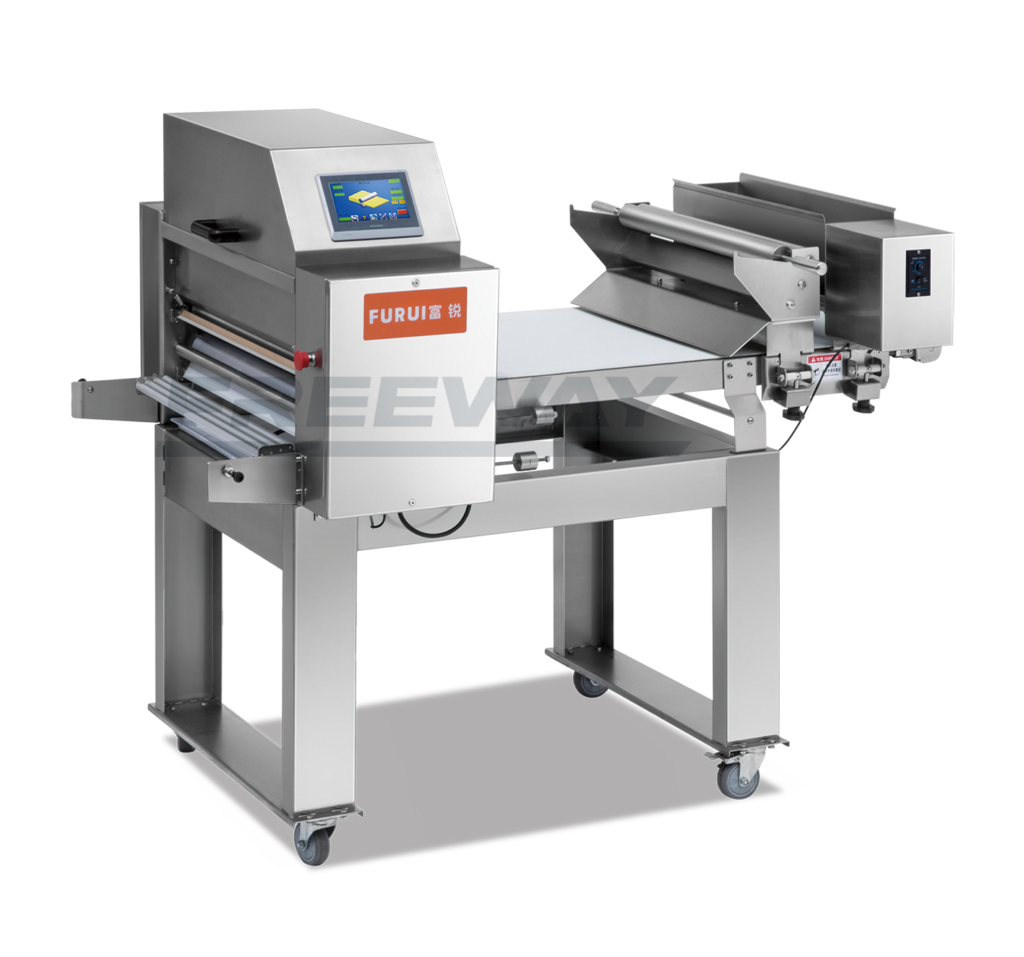
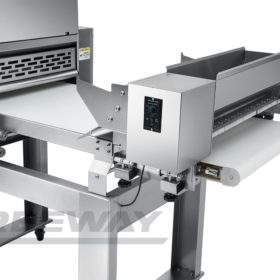
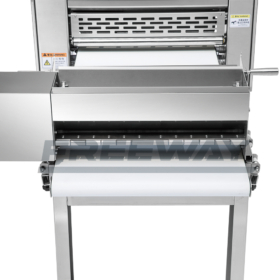
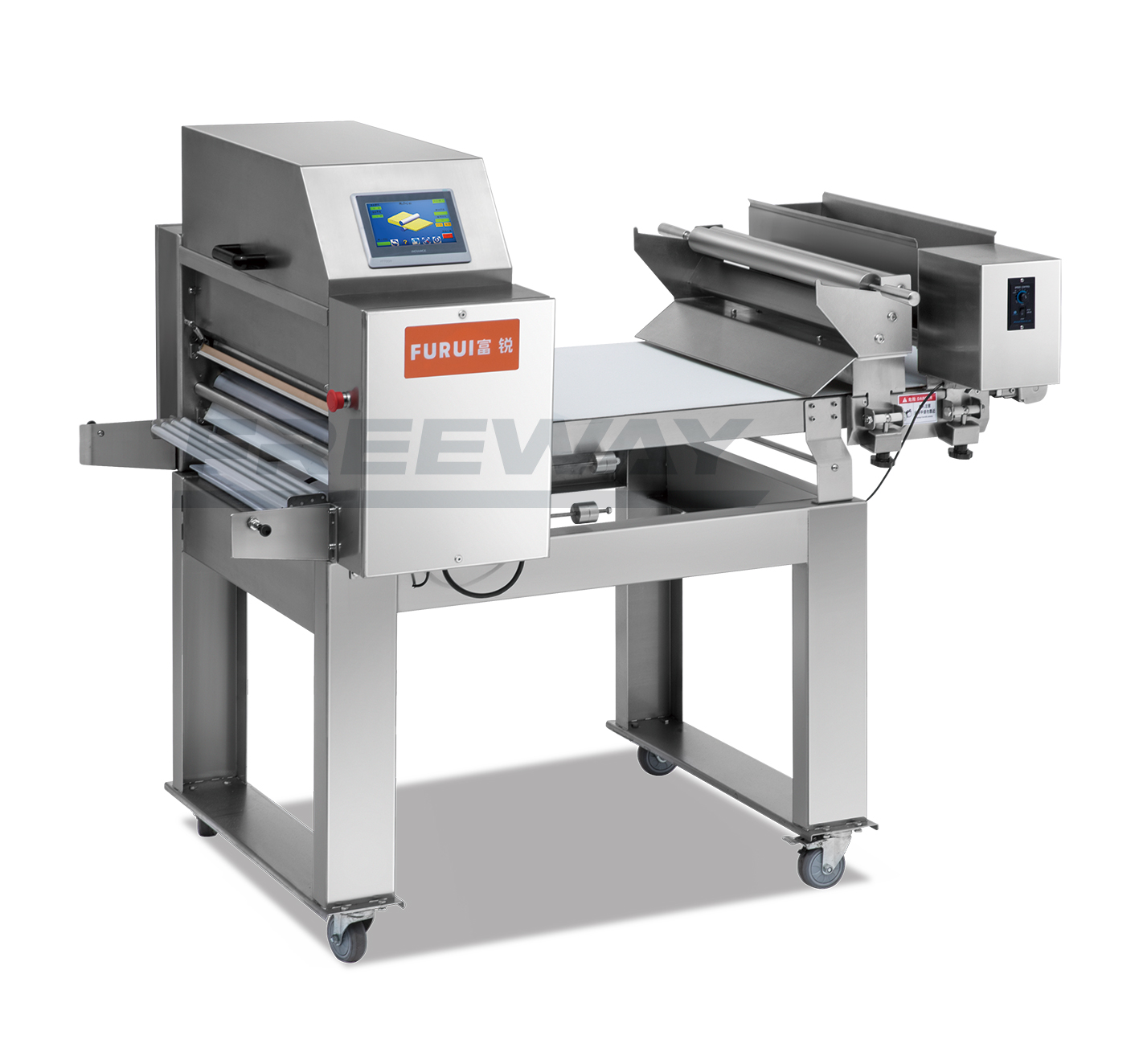 The dough strip calibrator homogenizes the dough sheet—especially from one spool to the next—and ensures exact weight distribution,when feeding the line with a dough spool.The dough loop control ensures that the dough sheet passes through the calibrator without tension or stretching (in the infeed with electromagnetic dough scale and at the outfeed with light sensor).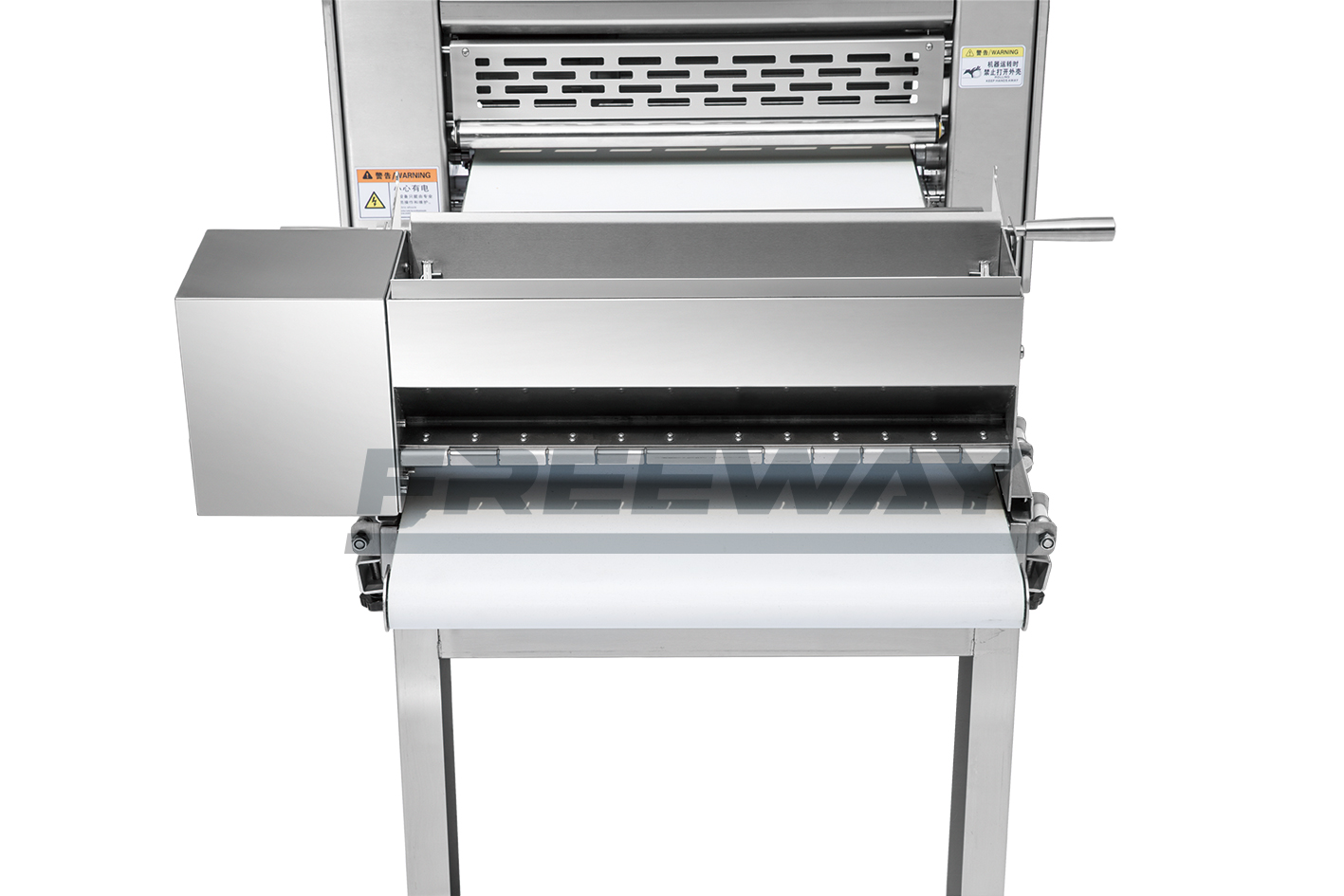
WeChat
A taui i te Ture QR e te wechat